 PiXEL
PiXEL
Trends
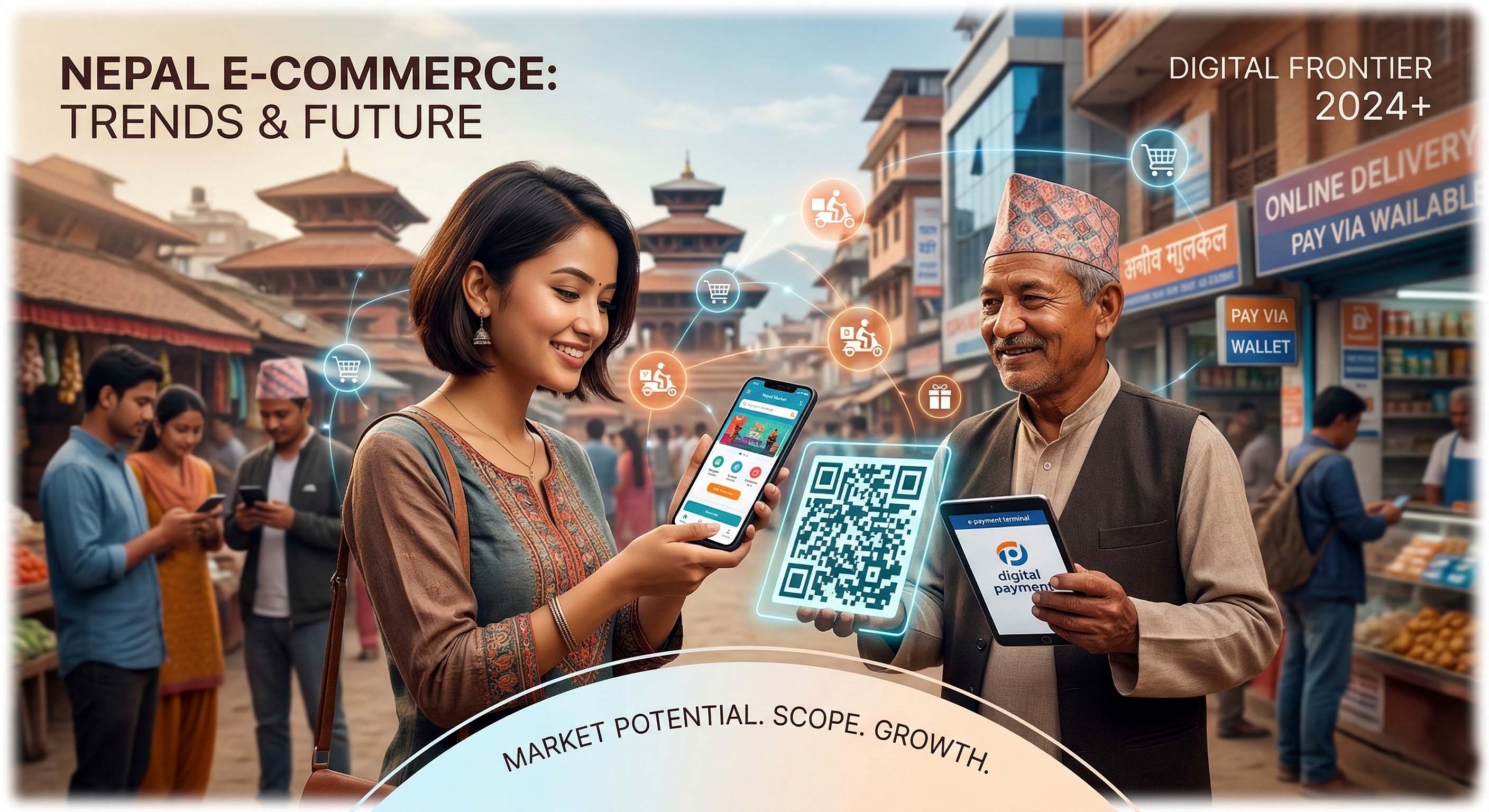
Navigating the Digital Frontier: E-commerce Trends, Scope, and Market Potential in Nepal (2024 & Beyond)
From the bustling streets of Kathmandu to remote villages, a digital revolution is unfolding in Nepal. E-commerce is no longer a luxury; it is becoming a cornerstone of the national economy. Driven by cheap data, smartphone ubiquity, and a shift in consumer trust, the Nepali online marketplace is a
Introduction
Not long ago, shopping in Nepal meant navigating crowded bazars, haggling over prices, and carrying physical cash. While that tradition remains, a parallel digital reality has emerged. The COVID-19 pandemic acted as a massive catalyst, forcing both consumers and businesses to embrace online transactions.
Today, e-commerce in Nepal is transitioning from an nascent industry to a critical economic driver. With a population that is increasingly tech-savvy and a landscape that poses unique logistical challenges that digital connectivity can solve, the scope for online retail is unprecedented.
This blog post provides a deep dive into the current trends shaping Nepali e-commerce, the untapped scope, and a detailed analysis of the market potential.
________________________________________
1. Current E-commerce Trends in Nepal
The Nepali e-commerce ecosystem is dynamic and evolving rapidly. Several key trends define the current landscape:
A. The Rise of Social Commerce
Before setting up full-fledged websites, many Nepali entrepreneurs test the waters on social media. Facebook, Instagram, and increasingly, TikTok, are major sales channels. Small businesses utilize "Direct Message to Order" models, leveraging organic reach and video content (TikTok reviews/unboxing) to drive sales.
B. The QR Code Revolution and Digital Payments
Cash on Delivery (COD) is still dominant, but its throne is shaking. The proliferation of digital wallets like eSewa, Khalti, and IME Pay, combined with the interoperability of Fonepay QR codes, has revolutionized payments. E-commerce platforms now offer discounts for pre-payment, and consumers are increasingly comfortable with digital transactions due to their convenience and security.
C. M-Commerce (Mobile First)
Nepal is a "mobile-first" nation. Most users experience the internet solely through smartphones. Consequently, successful e-commerce players are prioritizing mobile app development and responsive web design over desktop experiences. App-exclusive deals are a common strategy to drive downloads and retention.
D. Hyper-local Delivery and Niche Marketplaces
While general marketplaces exist, there is a growing trend toward hyper-local delivery (getting products within hours) and niche platforms. We see specialized e-commerce for groceries (e.g., Kirana), gadgets, fashion, and even made-in-Nepal handicrafts.
E. Influencer Marketing over Traditional Ads
Nepali consumers trust micro-influencers and content creators more than traditional celebrity endorsements. E-commerce brands are partnering with TikTokers, YouTubers, and Instagrammers for product placements, reviews, and discount code promotions.
________________________________________
2. Scope and Possibilities
The scope for e-commerce in Nepal extends far beyond the current Kathmandu-centric model.
A. Penetrating the "Rest of Nepal" (RoN)
Currently, a massive portion of e-commerce volume is concentrated within the Kathmandu Valley. However, with internet penetration spreading rapidly to all 7 provinces, the biggest growth opportunity lies in tier-2 and tier-3 cities (Pokhara, Biratnagar, Butwal, Chitwan) and rural areas.
B. B2B E-commerce
While Business-to-Consumer (B2C) is visible, Business-to-Business (B2B) e-commerce is largely untapped. There is a massive opportunity for platforms that connect manufacturers/wholesalers directly with small retailers (Kirana stores) across Nepal, streamlining the supply chain.
C. Cross-Border E-commerce (Export)
Nepal possesses unique products—handicrafts, pashmina, tea, and herbs—that have high demand globally. Developing e-commerce platforms that facilitate easy export, handling international payments and logistics, holds immense potential for earning foreign currency.
D. Integration of AI and Personalization
As data collection improves, Nepali e-commerce can move toward AI-driven personalized shopping experiences, chatbots for customer service in Nepali/English, and predictive inventory management for sellers.
________________________________________
3. Market Analysis
To understand the true potential, we must analyze the market structure, consumer behavior, and existing bottlenecks.
A. Market Size and Key Players
While exact government figures on total e-commerce GMV (Gross Merchandise Value) are scarce, private sector estimates suggest a market worth hundreds of millions of USD, growing at a double-digit percentage annually.
• Market Leader: Daraz Nepal (owned by Alibaba Group) is the undisputed leader in terms of traffic, assortment, and logistics infrastructure.
• Major Players: SastoDeal (partnered with Flipkart), Gyapu Marketplace, and specialized players like Foodmandu (food delivery) and Urbansole.
• The Fragmented Majority: Thousands of unorganized Facebook and Instagram shops constitute a significant, though unmeasured, portion of total online sales.
B. Consumer Behavior
Nepali consumers are highly price-sensitive and value-conscious. They hunt for deals, discounts, and free shipping. However, a shift is occurring where consumers are willing to pay a slight premium for convenience and genuine products.
Trust remains a hurdle. Many consumers still research online but buy offline (ROBO), or insist on checking the product before paying (hence the continued reliance on COD).
C. Challenges and Bottlenecks
Despite the optimism, significant challenges remain:
1. Logistics and Addressing: Nepal lacks a standardized, digitized addressing system. "Deliver near the big pipal tree" makes last-mile delivery inefficient and costly, especially outside Kathmandu.
2. Digital Literacy and Trust: While many have smartphones, a large portion of the population lacks the digital literacy to navigate e-commerce apps safely, fearing scams and low-quality products.
3. Regulatory Framework: The recent introduction of the E-commerce Act aims to regulate the sector, but complexities regarding taxation, consumer protection for online purchases, and foreign direct investment (FDI) barriers still need streamlining.
4. High Cost of Operations: High import duties, internet costs, and logistical expenses compress margins for e-commerce businesses.
D. Future Outlook
The outlook is overwhelmingly bullish. With the Nepal Telecommunication Authority (NTA) working to expand 4G and 5G infrastructure, and the Nepal Rastra Bank promoting a digital economy, the foundation is solid.
Within the next 5 years, we expect to see:
• Consolidation in the market, with larger players acquiring smaller, niche ones.
• A drastic reduction in COD as digital payments become the default.
• The emergence of robust logistics companies specializing solely in e-commerce fulfillment outside Kathmandu.
Conclusion
E-commerce in Nepal is moving from a trend to a necessity. It is democratizing access to goods, allowing a farmer in Jumla to buy the same smartphone as a professional in Kathmandu, and enabling a small artisan in Bhaktapur to sell globally.
While challenges in logistics and regulation persist, the market potential is undeniable. For entrepreneurs, investors, and existing brick-and-mortar businesses, the message is clear: the future of retail in Nepal is digital. Establishing a robust online presence today is not just about growth—it is about future-proofing your business.
About the Author

Tanka Lamichhane
Data Enthusiast, Computer Instructor, Web Developer , Compute Instructor
View all postsStay Updated
Get the latest insights and stories delivered to your inbox.
Leave a Reply
Your email address will not be published. Required fields are marked *